




Pressing Under Pressure
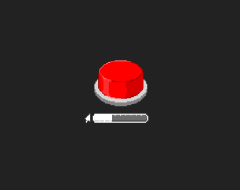
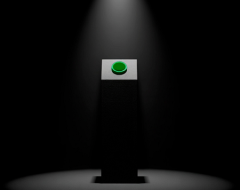
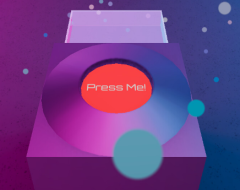
Pressing Under Pressure takes one of the simplest possible game controls and turns it into a surprisingly tense puzzle. There is a button in front of you. Most of the time, the game tells you what to do with it. Press once. Press several times. Hold it. Wait. Remember something. Count something. Ignore something. It sounds almost impossible to misunderstand, yet that is exactly where the challenge begins.
The game describes itself as a short series of click-based puzzles, with the entire control scheme reduced to clicking or touching the button. The simplicity is deliberate. Instead of teaching new controls, Pressing Under Pressure constantly changes the meaning of the one control you already understand.
A Button That Teaches You Not to Trust Yourself
Early challenges encourage a dangerous habit: read an instruction and immediately act on it. For the first few tasks, that approach seems reasonable. Then the wording becomes more important, visual information starts carrying over between challenges, and familiar commands gain unexpected conditions.
A good player eventually develops a different routine:
- read the entire instruction before touching anything;
- check whether the wording refers to the current screen or an earlier one;
- look at the button itself, not only the text above it;
- remember that waiting can be an action;
- avoid assuming that every visible distraction matters;
- expect a familiar rule to return in a slightly altered form.
This is where the title becomes accurate. The difficulty is not simply solving puzzles. It is solving them while the game encourages rushed decisions.
Failure also makes later attempts psychologically different. Players who have already lost to a particular trick usually know exactly what went wrong the next time they reach it. Comments on the original game repeatedly mention this pattern: a new puzzle causes a failure, but its solution becomes much easier to remember during the following run. At the same time, having to work back through earlier challenges makes every new mistake increasingly painful.
Memory Matters, But Not Always in the Way You Expect
One of the earliest tricks involves a number. The game presents it as something important enough to remember, encouraging the player to hold it in their head while dealing with everything that follows.
Much later, the number finally returns. The joke is that the game does not necessarily require the player to enter it. Instead, it can simply ask whether the player remembers it. Players have specifically commented on spending most of the run protecting this information only to discover that the game merely asks them to confirm that they remember it.
Other memory tests are less forgiving. One notable challenge tells the player to press once for every cat seen earlier. Donitz clarified in the game’s comments that the player should count the cats from an earlier button challenge.
Things worth mentally tracking include:
- numbers the game explicitly asks you to remember;
- animals or symbols shown on previous buttons;
- directions presented during earlier challenges;
- unusual wording that may return later;
- whether a previous task required pressing, holding, or waiting;
- visual details that initially appear decorative.
The clever part is that players do not always know which details are genuinely important. Pressing Under Pressure can make an irrelevant piece of information feel crucial while quietly preparing another detail for a later puzzle.
Geometry Becomes More Dangerous Than It Should Be
One of the most discussed puzzles asks players to press according to the number of corners in a displayed shape.
A triangle is straightforward. A square is straightforward. A circle has no corners. Then the game shows a star.
Many players instinctively press five times because a five-pointed star has five obvious outward points. The game counts ten corners: five outer points and five inward corners between them. This particular challenge has generated repeated questions from players who were certain that five should have worked.
The geometry section rewards a few simple habits:
- count the entire outline of a shape;
- include inward as well as outward corners;
- do not confuse “points” with “corners”;
- treat changing shapes differently from static ones;
- reread modifiers such as “more than once” carefully;
- do not stop counting simply because the obvious answer feels familiar.
There is also a changing, scribbled shape challenge that players frequently identify as one of the more confusing parts of the game. Comments describe the shape as moving or changing while the player is expected to respond to its corners, making literal counting much less comfortable than it was during the earlier static examples.
Common Challenge Types
| Challenge Type | What It Tests | Typical Trap |
| Counting | Careful observation | Giving the obvious answer too quickly |
| Memory | Attention to earlier screens | Forgetting what information mattered |
| Timing | Patience and reaction | Pressing too early or too late |
| Hold/release | Reading exact instructions | Treating release as another normal click |
| Odd/even | Basic logic under pressure | Overthinking a simple distinction |
| Distraction | Concentration | Reacting to something unrelated to the instruction |
The important pattern is that Pressing Under Pressure rarely requires advanced knowledge. Instead, it makes basic tasks difficult by putting them in an environment where the player expects deception.
Timing Changes the Meaning of the Button
Not every puzzle is solved by determining how many times to click. Some revolve around when the button should be pressed.
One of the most memorable examples tells the player to press after half the available time has passed. While the player watches the timer, the camera suddenly moves upward and reveals a spider. The distraction is effective because the player is already concentrating on timing, and an unexpected movement can cause an immediate reaction or make them lose track of the correct moment. Several players specifically mention the spider sequence as the point that caught them off guard.
Timing puzzles are easier when you separate the instruction from everything happening around it:
- identify the exact trigger before the timer starts;
- decide whether the game asks for a press, hold, or release;
- keep watching the relevant information even if the camera moves;
- do not treat a visual surprise as a new command;
- remember that “after halfway” is different from “at halfway”;
- avoid panic-clicking when time becomes low.
The game also includes hold-and-release situations. These are particularly effective because players spend most of the game associating progress with pressing. When the instruction suddenly depends on releasing instead, muscle memory can become the enemy. Players have repeatedly mentioned being tricked by the release segment even after successfully handling earlier challenges.
Simple Questions Become Difficult Under Pressure
At some points the game asks things that are almost embarrassingly basic. Odd and even numbers are one example. Under normal circumstances, deciding whether a number is odd takes almost no effort. After several deceptive challenges, however, a player may start searching for a hidden interpretation that is not actually there.
That is one of the strongest recurring tricks in Pressing Under Pressure: sometimes the obvious solution really is correct.
Before committing to an answer, it helps to ask:
- Is there actually a trick here?
- Does the instruction contain unusual wording?
- Is it asking about the present or the past?
- Does the button contain additional information?
- Is there a timer changing the rule?
- Would simply following the instruction literally solve it?
This creates an amusing reverse problem. The game teaches players to distrust everything, then occasionally benefits from giving them something completely straightforward.
The Horror Elements Are Mostly About Distraction
Pressing Under Pressure is not structured like a conventional horror game, but it uses creepy presentation to make concentration harder. The first-person view, sudden camera movements, unexpected images, and unsettling moments create tension around an object that would otherwise be harmless.
The game even directly asks about jumpscares. Agreeing to one leads to a deliberately unexpected reveal involving a kitten, while the spider sequence can still surprise players independently. Comments on the official page repeatedly mention both moments.
The game uses its atmosphere in several ways:
- sudden camera movement pulls attention away from the button;
- unexpected creatures create a reflexive response;
- silence makes waiting feel suspicious;
- apparently harmless prompts encourage overthinking;
- visual jokes can arrive in the middle of serious timing tasks;
- creepy presentation makes normal instructions feel less trustworthy.
This matters because the horror is connected to the puzzle design. A spider is not dangerous because the player needs to fight it. It is dangerous because noticing it at the wrong moment may cause a mistake.
The Game Learns Your Habits
The most effective puzzles do not introduce completely new systems. They exploit behavior the player developed earlier.
After dozens of prompts telling you to press, the game can simply ask you not to press. One memorable instruction politely tells the player not to do it at all. That should be easy, yet resisting the button after spending the entire run interacting with it can feel strangely difficult. Players have even repeated the wording of this particular challenge in the game’s comments because of how effectively it reverses the usual objective.
A successful approach to these reversal puzzles is:
- stop moving before reading the new instruction;
- do not assume a new screen requires immediate interaction;
- distinguish “do nothing” from “wait and then press”;
- watch for commands involving release instead of press;
- avoid clicking just to see what happens;
- remember that curiosity itself can be part of the trap.
This becomes increasingly important near the end, when a single impulsive action can erase a run that has already survived numerous earlier challenges.
Why Repeating Earlier Puzzles Changes the Experience
Normally, repeating a puzzle after learning its answer makes a game easier. That happens here too, but it creates an additional layer of pressure.
Once the player has memorized most early challenges, they move through them faster and with greater confidence. That confidence can become dangerous. A familiar screen encourages automatic input, and automatic input is exactly what many later tricks punish.
The repetition therefore serves two purposes. It turns previous failures into knowledge, but it also trains habits that future challenges can exploit.
By the time a player reaches the later section, the challenge is less about raw intelligence and more about switching mental modes quickly. One puzzle demands memory, the next simple arithmetic, another precise timing, and another asks for no input at all.
The Rat at the End
The final stretch contains one of the game’s simplest and most effective temptations: a rat.
By this stage, players have learned that pressing can be dangerous, that instructions may be literal, and that apparently harmless objects can exist specifically to provoke a reaction. Yet the rat creates exactly the kind of curiosity the game has been training the player to suppress. Comments on the official page are full of players joking that they desperately wanted to interact with or “pet” the rat even though doing so could interfere with the final sequence.
For the last portion of a run, the safest mindset is:
- trust the instruction more than your curiosity;
- ignore objects unless the game specifically makes them relevant;
- remember earlier directional information;
- do not celebrate before the sequence has clearly finished;
- keep treating release and waiting as possible answers;
- never press simply because something interesting appeared.
It is a fitting final test because the game no longer needs a complicated mathematical puzzle. By that point, the button itself has become enough of a psychological trap.
A Puzzle Game About Resisting Reflexes
Pressing Under Pressure works because its rules remain small while their interpretations keep changing. There is no inventory to manage, no complicated movement system, and no collection of abilities to learn. The player receives one button and a sequence of instructions.
Everything else comes from context.
A press can mean an answer, a count, a timed reaction, or a fatal mistake. Holding the button can suddenly matter more than clicking it. A cat seen minutes ago can become relevant again. A five-pointed star can require ten presses. A spider can appear precisely when the player needs to watch a timer. Even remembering something may eventually matter less than simply remembering that you remembered it.
That combination makes the game more than a collection of trick questions. It gradually trains the player to react, then punishes automatic reactions; encourages suspicion, then occasionally gives an honest instruction; demands memory, then jokes about whether that memory was necessary.
The most useful lesson is therefore simple: slow down.
Read every word. Look at the entire button. Remember what the game showed earlier. Count carefully. Watch the timer. Do not let a spider, kitten, rat, strange shape, or suspiciously polite instruction make the decision for you.
Pressing Under Pressure may only give you one button, but figuring out when not to press it is where most of the game actually happens.
FAQ
What Is Pressing Under Pressure?
Pressing Under Pressure is a short one-button puzzle game by Donitz. It combines logic, memory, timing, observation, and trick instructions.
How Do You Play Pressing Under Pressure?
You interact with the game using a single button. Depending on the challenge, you may need to press, hold, release, wait, or avoid pressing entirely.
Is Pressing Under Pressure Like The Impossible Quiz?
Yes, the creator described The Impossible Quiz as an inspiration. Both games use misleading instructions and unexpected puzzle solutions.
How Many Levels Are in Pressing Under Pressure?
The original game uses a fixed sequence of short puzzles rather than hundreds of traditional levels. Large level counts usually refer to unofficial remakes or similar mobile games.
Why Does the Star Require 10 Presses?
The game counts both the five outer points and the five inward corners of the star. That gives the shape 10 corners in total.
What Number Do You Need to Remember?
The game shows a number early and asks you to remember it for later. The joke is that a later challenge mainly checks whether you still remember it.
What Should You Do During the Spider Challenge?
Focus on the timing instruction instead of the spider. The creature is there to distract you and make you react at the wrong moment.
Does Pressing Under Pressure Have Jumpscares?
Yes, the game includes several sudden visual surprises. They are mostly used to distract the player during puzzles.
Why Do You Restart After a Mistake?
Failure can send you back through earlier parts of the sequence. Repeated attempts become easier because you gradually memorize the previous solutions.
What Is the Best Strategy for Pressing Under Pressure?
Read every instruction completely before touching the button. Do not assume that pressing is always the correct action.
